
Lifting Equipment
Hoists, slings, jacks, lifting gears and rigging hardware supplied across Pakistan for warehouse, workshop and construction use. Rated gear with certification, plus inspection of what you already own.
1 to 100+ Tons
Capacity Range
Built In-House
Own Workshop
Nationwide
Survey & Erection
Load Tested
Certified at Handover
The Challenge
Walk into most workshops in SITE Karachi or Kot Lakhpat Lahore and you will find the same thing hanging on the wall. A chain block bought years ago. Two or three slings with no tags left on them. A shackle that came off another job. Nobody knows the rated capacity of any of it.
The crane gets inspected because it is big and expensive. The gear that actually touches the load does not. That is where loads get dropped.
Every sling and shackle carries a working load limit, a WLL. Once the tag is gone or the stamping has worn off, the item has no rated capacity. It is scrap that looks like a tool.
A design factor is not spare capacity. It is the ratio between minimum breaking strength and the WLL, and SafeWork guidance on rigging principles is direct about this: the WLL must never be exceeded. A proof load, normally twice the WLL, is applied by a competent person during testing. That is a test, not a working figure.
Sling angle catches more people than overloading does. When two legs are spread apart, each leg carries more than its share of the weight. The preferred included angle is 60 degrees, 90 degrees is the maximum recommended, and no sling should be used past 120 degrees because the leg forces climb sharply beyond that point. Two 3 ton slings do not lift 6 tons if they are spread wide. Angles below 15 degrees should be avoided as well.
One more thing riggers get wrong. On a 3 or 4 leg sling, the rating assumes two legs are carrying the load. The others hold the item steady. Sling leg lengths vary in manufacture, and the centre of gravity shifts, so the weight is rarely shared evenly.
Gear bought from five different shops over ten years has five different marking systems, no common register and no shared due date for examination.
When a factory inspector asks for the examination register during a sugar mill shutdown in Rahim Yar Khan or an annual outage at a cement plant, the paperwork either exists or it does not. Under Section 33 of the Factories Act 1934, every part of a crane and other lifting machinery, including working gear, ropes, chains and anchoring appliances, must be thoroughly examined by a competent person at least once every twelve months, and a register of every examination has to be kept. The safe working load must be plainly marked, and the machinery must not be loaded past it.
The Punjab Occupational Safety and Health Act 2019 separately lists the use, handling and storage of cranes, hoists, lifts and other lifting operations among the matters it covers, and places general duties on the employer.
Plants that export, or that get audited by an overseas buyer, are usually held to a shorter interval. Regulation 9 of the UK LOLER rules sets six months for lifting accessories such as slings, shackles and eye bolts, and twelve months for other equipment, with an extra examination after any exceptional event that could have damaged the gear. If a European or Gulf client audits your loading bay in Port Qasim, this is the standard they will apply.
What We Supply
Electric chain hoists and wire rope hoists for fixed installations, and manual chain blocks and lever blocks for maintenance work where there is no power. Chain blocks are the workhorse of every Pakistani workshop and the item most often used well past its service life.
Webbing slings for finished or painted surfaces, alloy chain slings for hot and abrasive work in foundries and steel yards, and wire rope slings where the load is heavy and the edges are sharp. Each is supplied tagged with its WLL.
Bow and dee shackles, eye bolts, hooks, turnbuckles and connecting links. These are small items with a habit of getting swapped between jobs, which is why marking and a register matter more here than anywhere else.
A spreader beam moves the lifting points outward and keeps sling legs closer to vertical. That is often the correct answer to a bad sling angle, rather than buying a bigger sling.
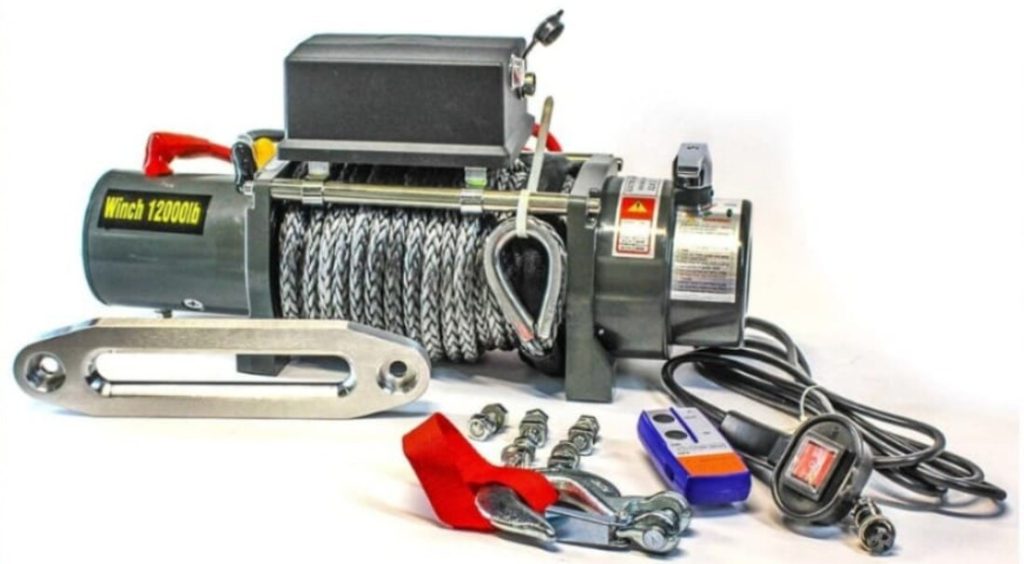
Hydraulic jacks, bottle jacks and winches for machine positioning, installation work and shutdown jobs where a crane cannot reach.
How It Works
Warehouses and logistics yards in Faisalabad M3 and Sundar Industrial Estate need gear rated for repeated daily handling at loading bays. Construction sites in Islamabad and Gwadar need items that survive weather, dust and being dragged across a slab.
Maintenance teams need a third thing again. During a plant shutdown at Hattar or Nooriabad, gear is used hard for two weeks by crews who did not select it. That is the period when most damage happens and when a pre use check matters most.
For fixed lifting at a single machine, jib cranes for workstations usually beat a chain block on a beam. For heavier and repeated handling across a bay, speak to us as an overhead crane manufacturer. We also supply hoist and crane spare parts for machines already running.
Detail
1. Assess the lift. Weight, shape, lifting points, surface finish, temperature, edges and how many times a shift.
2. Select rated gear. WLL is calculated with the sling angle and hitch included, not just the load weight.
3. Supply with certification. Items come tagged and identifiable, with paperwork you can file.
4. Set up inspection. Pre use checks by the operator, and periodic examination by a competent person against the interval that applies to you.
5. Replace worn items. Cut damaged slings before disposal so they cannot return to service.
Standards
Send the weight, the shape, the lifting points and how often the lift happens. Photographs of your existing gear are enough for us to tell you what is still serviceable.
Phone and WhatsApp enquiries welcome. Site visits anywhere in Pakistan.
Questions
Hoists including electric, wire rope and manual chain blocks. Slings in webbing, alloy chain and wire rope. Shackles, eye bolts, hooks and rigging hardware. Lifting and spreader beams. Hydraulic jacks and winches.
Yes. Rated items are supplied with identification and certification so they can be entered in your examination register, which Section 33 of the Factories Act 1934 requires you to maintain.
Yes. Slings, shackles, blocks, jacks and winches for site work. Tell us the site conditions, because gear selection for an outdoor slab differs from a covered workshop.
Yes. We check items for wear, distortion, corrosion, damaged stitching and illegible or missing markings, tag what passes and remove what fails.
We supply jacks, winches and rigging hardware used for vehicle and loading bay work. Tell us the weight and the lifting point and we will confirm what suits.
Working load limit, an identification or serial number and traceability back to the certificate. If any of that is missing the item has no rated capacity and should be taken out of use.