
Steel Structures
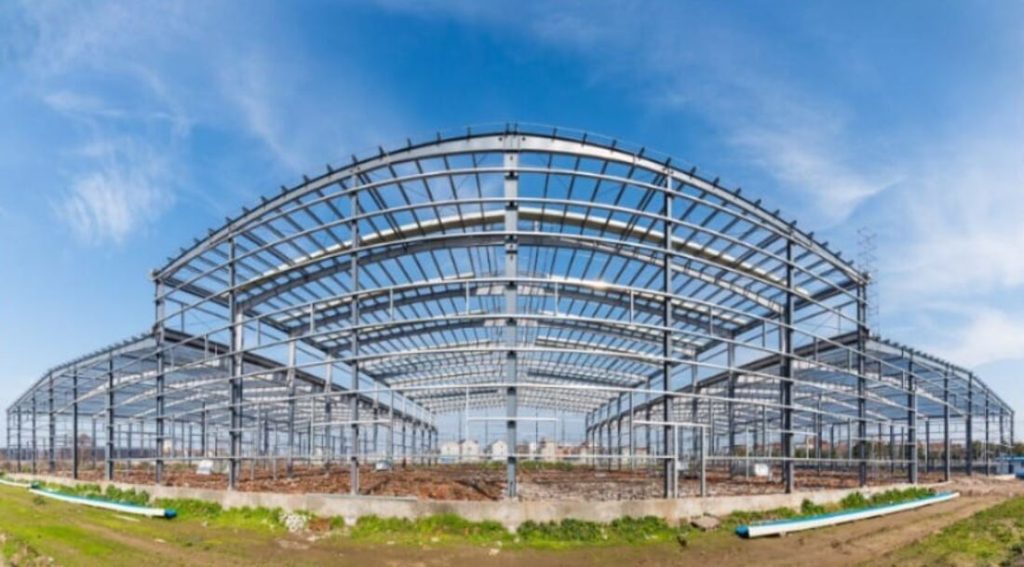
Steel structure fabrication in Pakistan covering MS structure, SS structure and prefab work. Allied Steel Structure scope including pipe racks, industrial platforms and plant structures, fabricated in our workshop and erected nationwide.
MS & SS Work
In-House Fabrication
Built to Drawing
Or We Measure
Nationwide
Delivery & Erection
Coded Welding
Inspected Joints
The Challenge
Send us your structural drawings. If you do not have them, we survey and produce them.
Most structural delays are not caused by welding speed. They are caused by drawings that were never checked before cutting started.
A design drawing shows what the engineer wants. A shop drawing shows what the fabricator will actually make, member by member, with every hole, cleat and weld marked. Skipping the second step means the first fit up problem is found on site, at height, with the crane on hire.
We check dimensions, connections and tolerances before any plate is cut, and we raise clashes while they are still cheap to fix.
When one firm makes the steel and another puts it up, nobody owns the fit.
Bolt holes that miss by a few millimetres get opened with a grinder on site. That removes metal from a connection somebody calculated, at the exact point where the load transfers, and there is no record of what was taken out. Multiply that across a pipe rack and you have a structure nobody can certify.
Site erection also carries duties you cannot pass down the chain. The Punjab Occupational Safety and Health Act 2019 covers scaffolding and work at height, protective equipment, and the use of cranes and lifting operations. Under Section 33 of the Factories Act 1934, lifting machinery on the job must be sound, properly maintained, marked with its safe working load and thoroughly examined by a competent person at least every twelve months.
We fabricate and erect as one scope, which removes the argument entirely.
What We Supply
Mild steel and carbon steel for columns, beams, trusses, frames, brackets and supports. This is the bulk of industrial structural work in Pakistan and the material most factory sheds, platforms and racks are built from.
How It Works
Stainless steel frames, platforms and railings for food, dairy, pharmaceutical and chemical areas where the structure gets washed down or sits in a corrosive atmosphere.
We keep stainless work in a separate area with dedicated tools. Grinding mild steel nearby embeds iron particles in the stainless surface, and those particles rust months later and pit the metal from the outside. Ask any fabricator how they separate the two before placing an order.
Detail
Frames designed and made in the workshop, delivered in sections and bolted together on your plot. Less site welding, faster erection and better weld conditions, since a joint made flat on a bench beats the same joint made overhead in the wind.
Building scope is covered on our prefabricated steel structures and industrial buildings pages.
Standards
Multi tier racks carrying process piping, cable trays and equipment. Loads change over a plant’s life, so we ask what may be added later rather than sizing only for today.
Access steel for maintenance points, valve stations and equipment at height. Handrails, guardrails, toe plates and stair geometry designed to be used daily, not just to pass a drawing.
Trestles, gantries and supports for conveyor lines in cement plants, grain handling and material transfer. These carry moving loads and vibration, which is a different design problem from a static platform.
Columns, brackets and runway support steel for overhead cranes, plus the crane runway beams themselves.
This is the item buyers most often get wrong. A crane loads your building through the runway into the columns and down into the foundations, and those columns were sized when the shed was built, sometimes decades ago. Wheel loads rise sharply with capacity and duty. Before any crane goes into an existing building we check whether the structure can take it, and we would rather tell you no than let you find out later.
Bases for presses, compressors and rotating equipment where vibration has to be handled, and mezzanine floors that add usable area inside an existing building without extending the footprint.
Process
I beams and H beams for spanning and framing. Box sections where torsion or appearance matters. Channels and angles for bracing, purlins and secondary members. Plates for gussets, base plates and built up sections. Trusses fabricated from angles or tubes for long spans with low weight.
Section choice is not interchangeable. An H section carries load about both axes far better than a channel of similar weight, and using the wrong profile to save material is how a platform ends up bouncing under foot.
Detail
Structural steel in Pakistan has to resist lateral load, and how much depends entirely on where the plant stands.
The Building Code of Pakistan Seismic Provisions were developed after the 2005 Kashmir earthquake and divide the country into five seismic zones following the framework of the 1997 Uniform Building Code. Zone 1 covers peak horizontal ground acceleration of roughly 0.05g to 0.08g, rising through Zone 2A, 2B and 3 to Zone 4 above 0.32g. Each zone carries its own zone factor, which drives the lateral force the structure must be designed for. The code was later carried into the 2021 Building Code of Pakistan.
The practical result: the same platform design is not valid everywhere. A structure that is adequate in lower Sindh may be under designed for a site in the north or in Balochistan. Confirm the zone for your location before reusing a drawing from another plant.
Detail
1. Drawing review and shop drawings. Design drawings checked, then shop drawings produced member by member.
2. Section selection. Profile, grade and thickness matched to the load and the service condition.
3. Cutting and welding. Done in the workshop under supervision, with fit up checked before final welding.
4. Surface treatment. Blasting to a specified grade under ISO 8501-1, then painting or galvanizing to suit the location.
5. Delivery. Sequenced so the erection crew receives members in the order they go up.
6. Site erection and alignment. Setting out, plumbing and alignment checked as the frame rises, not corrected afterwards.
Detail
Upload drawings, sketches or site photographs. Tell us the location, the loading and whether erection is included.
*Reference project: Industrial Platform Project, details to be confirmed from the project record before publication.*
This page sits under our steel fabrication services range.
Questions
I beams, H beams, box sections, channels, angles, plates and fabricated trusses. Tell us the span and the load and we will recommend the profile rather than matching what you used last time.
MS is mild or carbon steel, used for most industrial framing, and it needs a coating to resist corrosion. SS is stainless, used where the structure is washed down or exposed to a corrosive atmosphere. Stainless costs more, needs different welding practice and must be kept away from mild steel grinding.
Yes. Columns, brackets and runway support steel, and we check whether your existing building can carry the crane loads before work starts.
Yes. Fabrication, delivery and erection are one scope with one accountability, which removes the fit up argument that starts when two firms split the job.
Yes. Mezzanines, maintenance platforms, walkways, staircases and handrails, designed for the loading you tell us about and the access you actually need.
Yes, and we review them before cutting. If drawings do not exist we survey the site and produce them.